

6 Essential Peptide Procurement Tips for Research Labs

Updated: Oct 11

Ordering research-grade peptides can feel like a gamble if you are not sure what to look for. With concerns ranging from purity to shipping speed, even small mistakes can threaten the reliability of your experiments and waste valuable resources. Sorting through suppliers and documentation may seem overwhelming, but there are specific steps you can take to protect your work.
This guide zeroes in on the most practical ways to safeguard your peptide purchases and ensure your results stay trustworthy. By following these actionable insights, you will gain confidence and avoid the hidden risks that wait for uninformed buyers. Get ready to discover how each proven method can keep your research on track and your results dependable.
Table of Contents
Quick Summary
Takeaway | Explanation |
1. Verify Third-Party Lab Tests | Always request and review Certificates of Analysis (COAs) for purity and quality verification from suppliers before using peptides in research. |
2. Request Specific COAs | Ensure you obtain batch-specific COAs directly from testing labs, not copies from intermediaries, to confirm the quality of your peptides. |
3. Understand Purity Requirements | Aim for research-grade peptides with ≥99% purity to avoid contamination and ensure reliable experimental outcomes. |
4. Ensure Compliance Documentation | Confirm that peptides are labeled for research use only to meet legal and regulatory standards, protecting your institution from compliance issues. |
5. Utilize Bulk Purchasing for Savings | Plan bulk orders to reduce costs and streamline procurement efforts, but ensure you can maintain proper storage conditions for the peptides. |
1. Verify Third-Party Lab Testing Results
Third-party lab testing is your strongest defense against contaminated or mislabeled peptides. Independent verification confirms purity, identity, and quality before peptides reach your lab bench.
When sourcing peptides, verify that your supplier provides Certificates of Analysis (COAs) from accredited testing facilities. These documents show actual test results, not promises.
Why Third-Party Testing Matters
Your research depends on accurate data. Using untested peptides introduces variables you cannot control, which compromises experimental validity and wastes time, resources, and funding.
Third-party labs operate independently from suppliers, eliminating conflicts of interest. They test using standardized methods and report results transparently.
Independent lab testing is non-negotiable for research-grade peptides. It’s the only way to verify that what you ordered matches what you received.
What to Look For in Testing Documentation
When reviewing COAs, examine these critical elements:
Purity percentage (minimum ≥99% for research-grade peptides)
Testing methodology (HPLC, mass spectrometry, or other validated techniques)
Accreditation details (ISO certification or equivalent standards)
Batch number and date (ensures results match your specific order)
Lab contact information (verify the testing facility is legitimate)
How to Verify Authenticity of Lab Results
Not all COAs are created equal. Some suppliers may present false or outdated documentation. Lab-tested peptides ensure research reliability by implementing strict verification protocols.
Contact the testing laboratory directly to confirm they performed the analysis. Ask for verification methods specific to your peptide batch. Legitimate labs encourage this verification and respond promptly.
Request that your supplier provide original COAs directly from the lab, not copies from intermediaries. Digital copies should include security features or access codes that prevent tampering.
Practical Steps for Your Lab
Establish a verification protocol before accepting any peptide shipment:
Request COAs before placing orders
Contact the testing lab to confirm batch authenticity
Compare purity results against your experimental requirements
Document all testing information in your lab records
Cross-reference batch numbers with shipping documentation
Dedicate time during your procurement process to actually review these documents. Many researchers skip this step and pay the price later through failed experiments or retracted data.
Pro tip: Keep a digital archive of all COAs organized by batch number and date. This documentation protects your research integrity if questions arise about data validity and accelerates troubleshooting if unexpected results occur.
2. Request Certificates of Analysis for All Peptides
Certificates of Analysis (COAs) are the official documentation that proves your peptides meet quality standards. Without them, you have no way to verify what you actually received.
A COA is a detailed report from the testing laboratory that confirms the peptide’s identity, purity, potency, and absence of contaminants. It’s your written guarantee that your supplier delivered exactly what you ordered.
Why COAs Are Non-Negotiable
Research integrity depends on knowing the exact composition of every reagent you use. Peptides without documented testing are essentially unknown substances, which introduces uncontrolled variables into your experiments.
Suppliers that refuse to provide COAs are signaling they have something to hide. Reputable vendors make COAs readily available because they stand behind their products.
Every single peptide shipment deserves documentation. COAs transform peptide purchases from acts of faith into verified scientific transactions.
What to Request from Your Supplier
When ordering peptides, ask for COAs before placing your order. Here’s what your request should include:
Request COAs for the specific batch you’re purchasing, not generic documentation
Ask for original reports from the testing laboratory, not copies from intermediaries
Request digital or printed copies that clearly show batch numbers and testing dates
Ask about testing methods used (HPLC, mass spectrometry, amino acid analysis)
Verify that results match your research requirements
Making COAs Part of Your Procurement Standard
Establish COAs as a non-negotiable requirement in your procurement workflow. When you implement a peptide quality checklist for research scientists, COA review becomes systematic rather than occasional.
Document the COA request in your purchase order. This creates a paper trail and ensures accountability from your supplier. Include specific language requiring COAs before shipment is accepted.
Organizing Your Documentation System
Create a filing system for COAs organized by peptide type, batch number, and date received. This makes auditing your research records easier and supports reproducibility claims.
Store digital copies in a secure location with backup protection. Include COAs in your experimental records when publishing or presenting research findings.
Red Flags When Requesting COAs
Be cautious if a supplier exhibits these warning signs:
Delays in providing COAs or claims they’re unavailable
Offers only generic documentation without batch-specific information
Cannot verify the testing laboratory’s identity
Provides outdated or undated certificates
Refuses to provide original documentation from the testing facility
Pro tip: Request COAs immediately upon placing your order rather than waiting until shipment arrives. This prevents delays in your research timeline and gives you time to contact the supplier if documentation is missing or incomplete.
3. Check Purity Levels for Reliable Experimentation
Peptide purity directly impacts your experimental results. Even small amounts of impurities can skew data, invalidate findings, and waste months of research effort.
Research-grade peptides typically demonstrate purity levels of 95-99% or higher. Understanding what these percentages mean helps you make informed procurement decisions that protect your research quality.
Understanding Purity Percentages
When a COA reports 99% purity, it means 99% of the sample is the target peptide and 1% consists of other compounds. That remaining 1% might include degradation products, residual solvents, or synthesis byproducts.
For most research applications, ≥99% purity is the minimum acceptable standard. Lower purity levels introduce too many variables into your experiments and compromise reproducibility.
Purity percentages determine whether your experimental results reflect true peptide behavior or contamination effects. Never compromise on this metric.
How Purity Is Actually Tested
Laboratories use Reversed-Phase High Performance Liquid Chromatography (RP-HPLC) with UV detection to measure purity accurately. This method separates the target peptide from impurities and quantifies each component.
RP-HPLC is the industry standard because it provides precise, reproducible results across different labs and batches. The testing process requires proper sample preparation and validated methods to ensure accuracy.
Beyond basic purity, comprehensive testing includes checks for endotoxins, heavy metals, and sterility. These additional tests confirm suitability for sensitive biological assays where trace contaminants could compromise results.
What Purity Level Do You Actually Need?
Your required purity depends on your specific research application:
Cell culture work requires ≥98-99% purity to avoid cellular stress responses
In vivo studies demand ≥99% purity due to biological sensitivity
Structural analysis needs ≥99% purity to ensure accurate characterization
Binding assays require ≥99% purity to prevent off-target interactions
Synthesis studies may tolerate slightly lower purity if impurities are well characterized
Reading Your Purity Data
When reviewing COAs, look for these specific details:
Exact purity percentage (not ranges like “greater than 95%”)
Identification of detected impurities
Testing method and date performed
Batch-specific data matching your order
Comparison to your experimental requirements
Don’t accept vague language about purity. Numbers tell the real story. If your supplier reports “high purity” without specific percentages, request detailed documentation.
Purity Affects Your Bottom Line
Lower purity peptides may seem cheaper initially, but they cost more over time. Failed experiments require repeating work, consuming additional peptides, time, and funding.
Impure samples produce unreliable data that might require retraction or significant revisions. The financial and professional costs far exceed savings from buying cheaper, lower-purity peptides.
Pro tip: Create a purity requirement checklist specific to each peptide type you use regularly. Compare your requirements against COA values before placing orders to prevent purchasing unsuitable material.
4. Ensure Clear Research-Only Use Compliance
Peptides sold for research must be labeled strictly for research purposes only, not for human consumption. This distinction protects you legally and ensures your supplier operates within regulatory boundaries.
Research-only compliance means your peptides come with clear documentation stating they are intended solely for laboratory and scientific research. This labeling is more than a formality—it’s a legal requirement that shields your institution.
Why Research-Only Designation Matters
Regulatory agencies distinguish between research-grade peptides and those intended for other uses. Peptides labeled for research only cannot legally be used in any application involving human subjects or consumption.
Your institution’s compliance depends on understanding and respecting these boundaries. Purchasing from suppliers who blur these lines exposes your lab to regulatory scrutiny and potential legal consequences.
Research-only peptides come with clear legal protection. Suppliers without this designation may be operating outside regulatory compliance frameworks.
Verifying Compliance in Your Purchase Agreement
Before ordering, confirm that your supplier explicitly states research-only use restrictions. Research-only peptides ensure quality for labs by maintaining strict adherence to regulatory standards.
Your purchase documentation should include language confirming the peptides are for research purposes only. This protects both you and your supplier by creating a clear paper trail of intent.
Review your supplier’s terms and conditions carefully. Look for explicit statements about permitted uses and restrictions on the peptides you purchase.
Documentation Requirements for Compliance
Maintain clear records of your peptide procurement that demonstrate research-only use:
Purchase orders specifying research applications
COAs clearly labeled “for research use only”
Supplier agreements stating use restrictions
Internal documentation of how peptides are stored and used
Records showing peptides are used only within your research protocols
Red Flags in Supplier Communications
Be wary if suppliers use language suggesting peptides can be used for anything other than research:
Avoiding “research only” language in documentation
Offering bulk discounts without requiring research agreements
Providing unclear or missing use restrictions
Suggesting alternative uses for peptides
Failing to include compliance statements in COAs
Internal Lab Compliance Practices
Establish internal practices that reinforce research-only compliance at your institution:
Train staff on appropriate peptide handling and use
Store peptides in secure, controlled locations
Document all uses in laboratory notebooks
Review purchase orders for compliance before submission
Maintain audit trails showing research-only applications
Your compliance responsibility extends beyond purchasing. You must ensure peptides remain in secure research environments throughout their use.
Communicating Compliance to Your Institution
Work with your institutional compliance and procurement offices to establish peptide purchasing guidelines. These offices often have specific requirements about supplier certifications and use restrictions.
Provide clear information about research-only requirements when submitting purchase requests. This helps procurement staff select compliant suppliers and prevents ordering issues.
Pro tip: Create a compliance checklist for all peptide orders that includes verification of research-only labeling, supplier certifications, and use restrictions. Use this checklist for every purchase to ensure consistent institutional compliance.
5. Utilize Bulk Purchasing Discounts for Efficiency
Bulk purchasing offers significant cost savings on peptides while streamlining your procurement process. Strategic bulk orders reduce per-unit prices and ensure you maintain consistent inventory for ongoing research.
Labs that order frequently can unlock substantial discounts by consolidating purchases into larger quantities. These savings compound over time, freeing up budget for other research priorities.
Why Bulk Ordering Makes Financial Sense
Suppliers offer tiered pricing structures that reward larger orders with progressively better rates. Ordering 10 grams costs more per gram than ordering 50 grams from the same supplier.
These discounts reflect the supplier’s reduced handling and processing costs for consolidated shipments. The savings get passed to you when you order intelligently.
Beyond direct cost reductions, bulk ordering reduces transaction costs. Fewer orders mean less time spent on procurement paperwork, fewer shipping fees, and reduced administrative overhead.
Bulk purchasing combines financial savings with operational efficiency. Strategic ordering transforms your peptide costs from a recurring expense into a managed investment.
Planning Your Bulk Purchase Strategy
Successful bulk ordering requires understanding your actual peptide consumption patterns. Track which peptides your lab uses regularly and in what quantities over a 12-month period.
Identify peptides used consistently across multiple projects. These candidates are ideal for bulk purchasing because storage longevity is less concerning when demand is predictable.
The bulk peptide ordering process requires coordinating procurement timing with your research timeline and storage capacity to maximize benefits.
Storage Considerations for Bulk Orders
Bulk purchasing only makes sense if you can store peptides properly. Research-grade peptides maintain stability when stored at appropriate temperatures with proper documentation.
Calculate your available storage space before committing to large quantities. Account for rotation based on expiration dates and shelf life specifications from your supplier.
Proper storage prevents degradation and waste. Peptides stored correctly last longer and maintain purity throughout your research projects.
Discount Tier Planning
Understand your supplier’s discount structure before ordering:
Request detailed pricing at multiple quantity levels (5g, 10g, 25g, 50g, etc.)
Calculate total costs and per-unit prices to identify optimal order quantities
Consider whether volume discounts offset any increased storage requirements
Factor in shelf life when determining maximum quantities to purchase
Compare bulk prices across suppliers to identify the best value
Building Your Bulk Purchase Calendar
Coordinate bulk purchases with your annual research planning process. Order high-use peptides once or twice yearly rather than constantly small orders.
Time purchases to align with funding cycles and budget availability. This prevents emergency orders and the rushed pricing that accompanies urgent procurement.
Communicate anticipated needs to your suppliers early. Many offer additional discounts when they can plan production schedules around your bulk orders.
Cost Tracking and ROI Analysis
Document your savings from bulk purchasing to justify continued investment in this strategy. Track how much you spend on peptides under bulk purchasing versus your previous per-order costs.
Share these findings with your procurement office and budget administrators. Demonstrating concrete savings helps secure approval for larger bulk orders in future budget cycles.
Pro tip: Create a bulk purchasing calendar that maps your laboratory’s anticipated peptide needs across the year. Consolidate orders around 2-4 strategic purchasing windows to maximize discounts while maintaining optimal inventory levels.
6. Select Suppliers with Fast and Secure U.S. Shipping
Shipping speed and security directly impact your research timeline and peptide integrity. Suppliers offering fast U.S. delivery with proper handling protocols ensure your peptides arrive in optimal condition, ready for immediate use.
Fast, secure shipping reduces delays between ordering and experimentation. It also minimizes peptide degradation during transit, preserving the quality you paid for in your procurement process.
Why Shipping Speed Matters for Research
Delayed peptide delivery disrupts project schedules and pushes back data collection timelines. When your research depends on specific peptides, waiting weeks for delivery becomes a significant bottleneck.
Fast shipping from U.S.-based suppliers means peptides reach you in days rather than weeks. This speed translates directly into accelerated research progress and faster publication timelines.
Domestic U.S. shipping also provides better tracking and oversight throughout the delivery process compared to international shipments.
Fast U.S. shipping keeps your research moving forward. Delayed peptide delivery delays everything downstream from your experiments to your publications.
Security Considerations During Transit
Peptides require proper handling during shipping to maintain stability and purity. Temperature control, moisture protection, and careful packaging prevent degradation in transit.
Suppliers experienced with peptide logistics understand these requirements and pack accordingly. They use insulated packaging, ice packs, and protective materials suited to peptide sensitivity.
Tracking systems that provide real-time visibility help you monitor shipments and plan for receiving the materials when they arrive at your facility.
Evaluating Supplier Shipping Capabilities
When selecting peptide suppliers, assess these shipping-related factors:
Domestic fulfillment from U.S. locations (not international warehouses)
Guaranteed delivery timeframes with stated arrival windows
Temperature-controlled shipping options for sensitive peptides
Real-time tracking so you monitor shipments actively
Insurance and liability coverage protecting against shipping damage
Signature confirmation ensuring secure handoff to your receiving department
Planning Your Procurement Around Shipping Times
Know your supplier’s standard shipping timelines when planning research projects. If a supplier requires 5-7 business days for delivery, order accordingly to avoid project delays.
Use faster shipping options when timeline-critical research demands peptides quickly. Premium expedited shipping costs more but may be worthwhile when publication deadlines or grant milestones depend on timely data.
Account for weekend and holiday delays when calculating actual delivery windows. A supplier promising “5 business days” ordered on Thursday might not deliver until the following Wednesday.
Backup Supplier Strategy
Maintain relationships with multiple U.S.-based suppliers to ensure backup options if your primary supplier experiences delays. This redundancy protects against supply chain disruptions.
Know each supplier’s standard shipping speeds so you can quickly pivot to faster options when needed. Having alternatives prevents research paralysis during critical project phases.
Verifying Shipping and Handling Standards
Request information about how suppliers package and ship peptides. Ask specific questions about temperature control, packaging materials, and their experience with research-grade products.
Review online customer feedback about shipping experiences. Look for patterns in delivery speed, package condition upon arrival, and how suppliers handle shipping problems or damaged shipments.
Pro tip: Schedule peptide orders to arrive 2-3 days before you plan to use them in experiments. This timing allows you to verify shipment contents, check for damage, and confirm product quality before beginning your research.
Below is a comprehensive table summarizing the best practices and recommendations for sourcing and managing research-grade peptides as discussed in the article.
Aspect | Details | Importance |
Third-Party Testing | Verify supplier provides Certificates of Analysis (COAs) from accredited labs. Confirm purity, identity, and batch-specific analyses. | Ensures peptide reliability and experimental integrity. |
Certificates of Analysis (COAs) | Request specific batch COAs detailing purity, testing methods, and lab accreditation. Avoid suppliers lacking clear documentation. | Prevents uncontrolled variables and ensures regulatory compliance. |
Purity Levels | Confirm peptides meet required purity (≥99% for most applications). Validate test methods like HPLC. | Minimizes experimental errors ensuring reproducibility. |
Research-Only Labeling | Require suppliers to state “For research use only” on documentation. | Guarantees regulatory adherence and avoids legal issues. |
Bulk Purchasing | Consolidate high-use peptide orders to optimize pricing and maintain inventory. | Reduces costs and administrative overhead, ensuring efficient lab supply. |
Shipping Standards | Select suppliers providing fast, secure, temperature-controlled U.S. delivery with real-time tracking. | Protects peptide integrity and maintains research timelines. |
Secure Your Lab’s Success with Trusted Peptide Procurement
Navigating the complexities of peptide procurement can feel overwhelming when you need guaranteed purity, verified testing, and reliable delivery to keep your research on track. The challenges of verifying third-party lab testing, demanding Certificates of Analysis, ensuring research-only compliance, and balancing cost-effective bulk purchasing all require a trusted partner dedicated to meeting your high standards.
Premier Aminos understands your scientific goals and pain points. We specialize in providing ≥99% purity peptides backed by stringent third-party lab tests and transparent COAs. With fast, secure U.S. shipping and flexible bulk order options, we help you protect research integrity and streamline your procurement process. Explore our extensive collection of rigorously tested products at Peptides | Premier Aminos to experience confidence in every peptide purchase.
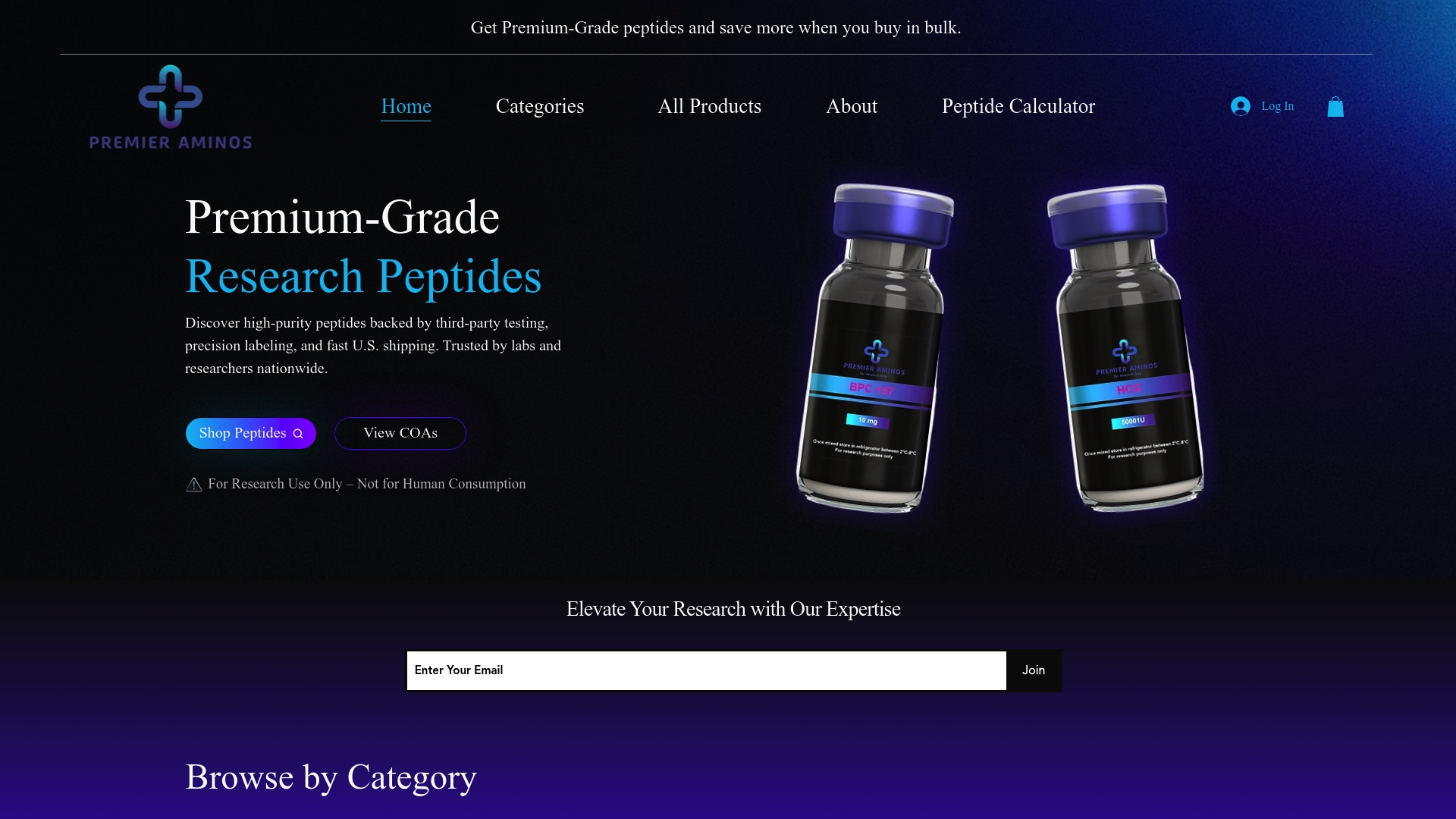
Take control of your peptide sourcing today by choosing a supplier committed to quality and transparency. Visit Premier Aminos now to access detailed Certificates of Analysis, verify research-only compliance, and secure peptides designed to support your lab’s success. Don’t wait until delayed shipments or questionable purity disrupt your experiments. Make the informed choice and advance your research with Premier Aminos.
Browse our full range of trusted options at All Products | Premier Aminos and start ordering with confidence.
Frequently Asked Questions
What is the significance of third-party lab testing for peptides?
Third-party lab testing ensures that the peptides you receive are pure, correctly labeled, and free from contaminants. Always verify that your supplier provides Certificates of Analysis (COAs) from accredited labs before making a purchase.
How can I ensure the peptides I order meet my research needs?
Examine the purity percentage, testing methods, and validation standards on the COAs. Request COAs specifically for the batch you are purchasing and compare the details to your research requirements to confirm suitability.
What should I do if I receive incomplete or questionable documentation?
Contact your supplier immediately and ask for the original COAs directly from the testing laboratory. If issues persist, consider finding an alternative supplier that adheres to high documentation standards and provides authentic testing records.
How can I effectively manage my peptide procurement process?
Implement a checklist that includes requesting COAs before placing orders and confirming batch authenticity with testing labs. Organize your documentation system to allow easy access and future reference for all your peptide acquisitions.
What are the benefits of bulk purchasing peptides?
Bulk purchasing typically offers substantial discounts and reduces overall procurement costs. Analyze your lab’s consumption patterns to strategically plan your orders, potentially saving around 20% or more on peptide expenses.
How can I verify that a peptide supplier adheres to research-only compliance?
Ensure your purchase agreements and COAs explicitly state that the peptides are for research use only. Document these confirmations to safeguard against regulatory scrutiny and maintain compliance within your institution.
Recommended


Comments