

How to Verify Peptide Purity for Research Accuracy

Updated: Sep 5
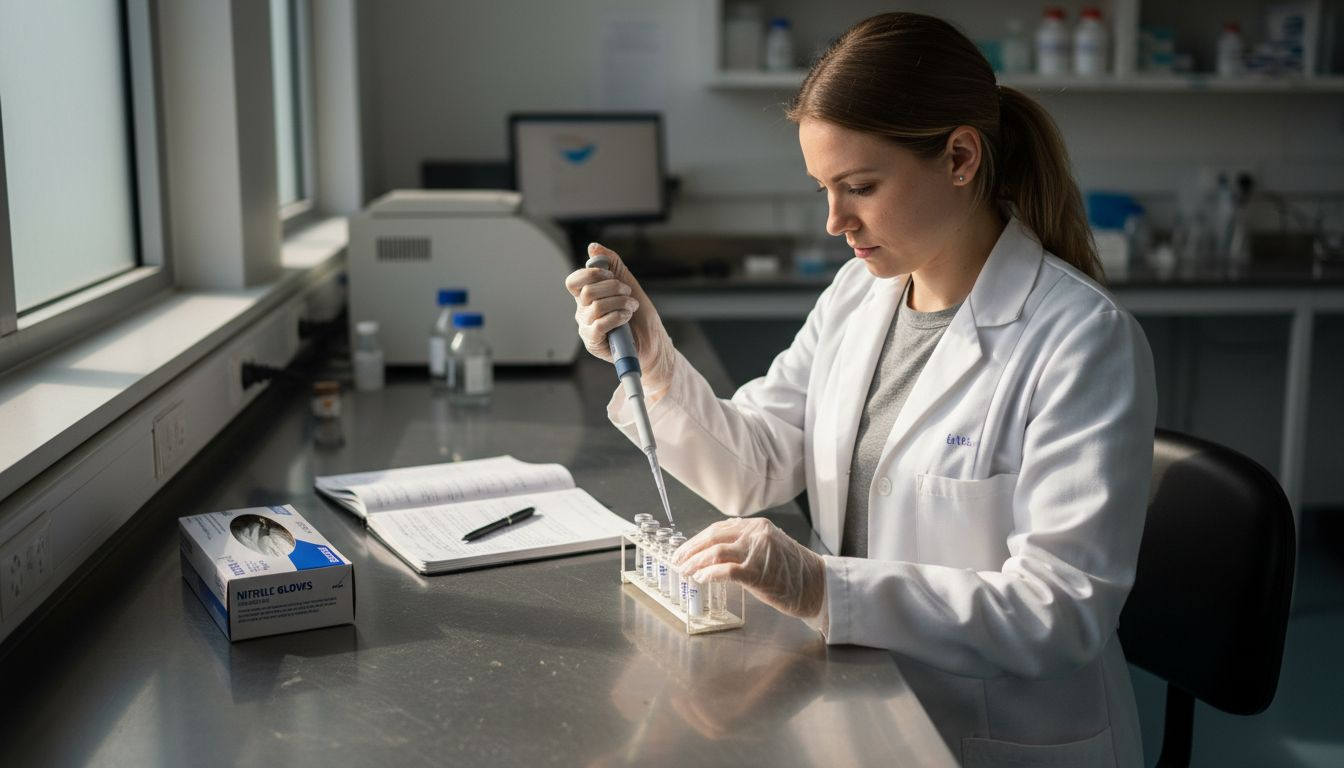
Every researcher knows that even a minor impurity can disrupt the outcome of a critical experiment. Peptide purity verification is a foundational step for maintaining scientific credibility and ensuring compliance with American standards. This guide highlights how combining techniques like High-Performance Liquid Chromatography and Mass Spectrometry provides detailed insight into peptide composition, empowering you to achieve reproducible results and confidently advance your biomedical studies.
Table of Contents
Quick Summary
Key Point | Explanation |
1. Prepare equipment meticulously | Gather and sterilize your lab equipment and peptide samples to ensure accuracy and reliability in research results. |
2. Review Certificates of Analysis | Validate sample quality by checking molecular characteristics against the Certificate of Analysis to ensure research integrity. |
3. Select appropriate purity testing methods | Choose and calibrate suitable analytical techniques to accurately assess peptide purity and molecular integrity. |
4. Conduct precise analysis | Execute HPLC or Mass Spectrometry with attention to detail to generate reliable data regarding peptide purity. |
5. Interpret results systematically | Analyze test data carefully to confirm peptide integrity, ensuring minor variations do not affect research conclusions. |
Step 1: Prepare Laboratory Equipment and Peptide Samples
Accurate peptide research begins with meticulous preparation of both equipment and samples. This critical first step ensures the reliability and reproducibility of your experimental results.
To start, you’ll need to gather essential laboratory equipment and organize your peptide samples with precision. Peptide labeling standards play a crucial role in maintaining research integrity. Assemble the following core equipment:
High-precision analytical balance (accuracy to 0.0001g)
Calibrated micropipettes (multiple volume ranges)
Sterile microcentrifuge tubes
Sterile disposable gloves
Personal protective equipment (lab coat, safety glasses)
Molecular-grade water
Prepare your peptide samples by following these systematic steps:
Clean and sterilize all work surfaces with 70% ethanol
Put on sterile gloves to prevent contamination
Allow peptide samples to reach room temperature
Gently centrifuge samples to collect any residual material
Use calibrated micropipettes for precise sample handling
Maintain a clean, organized workspace and minimize potential sources of sample degradation. Temperature, humidity, and handling can significantly impact peptide integrity.
Proper sample preparation is not just a protocol—it’s the foundation of reliable scientific research.
Pro tip: Always document each step of your sample preparation process in a detailed laboratory notebook to ensure traceability and reproducibility.
Step 2: Review Certificates of Analysis and Documentation
Certificates of Analysis (COAs) represent the critical validation step in peptide research, providing essential insights into your sample’s quality and molecular characteristics. These documents are your scientific passport to ensuring research integrity and experimental accuracy.
Lab-tested peptides demand meticulous documentation review. Examine your COA for the following key components:
Molecular weight verification
Purity percentage (minimum ≥99% for research grade)
Amino acid sequence confirmation
Batch-specific identification number
Production and testing dates
Analytical method details
When reviewing documentation, focus on these systematic evaluation steps:
Check the issuing laboratory’s accreditation
Verify the document’s authentication and signature
Compare stated molecular characteristics with your research requirements
Cross-reference batch numbers with sample labels
Assess the testing methodology and instrumentation used
Pay close attention to subtle variations in peptide composition that could impact your research outcomes. Minor deviations can significantly influence experimental results.
A meticulously reviewed Certificate of Analysis is your first line of defense against potential research inconsistencies.
Pro tip: Always retain digital and physical copies of Certificates of Analysis, organizing them systematically for future reference and potential reproducibility checks.
Step 3: Select and Calibrate Appropriate Purity Testing Methods
Accurate peptide purity testing requires selecting and meticulously calibrating analytical methods that can precisely evaluate molecular integrity. Your chosen techniques will directly impact the reliability of your research outcomes.
Peptide labeling standards underscore the importance of choosing appropriate testing methodologies. Consider these primary analytical techniques for peptide purity assessment:
High-Performance Liquid Chromatography (HPLC)
Mass Spectrometry (MS)
Amino Acid Analysis
Capillary Electrophoresis
Nuclear Magnetic Resonance (NMR)
When selecting and calibrating your testing methods, follow these systematic steps:
Evaluate the specific peptide’s molecular characteristics
Determine the required resolution and sensitivity
Select complementary analytical techniques
Calibrate instruments using standard reference materials
Establish reproducible testing protocols
Each analytical technique offers unique advantages for detecting molecular variations. Your selection should balance sensitivity, reproducibility, and research-specific requirements.
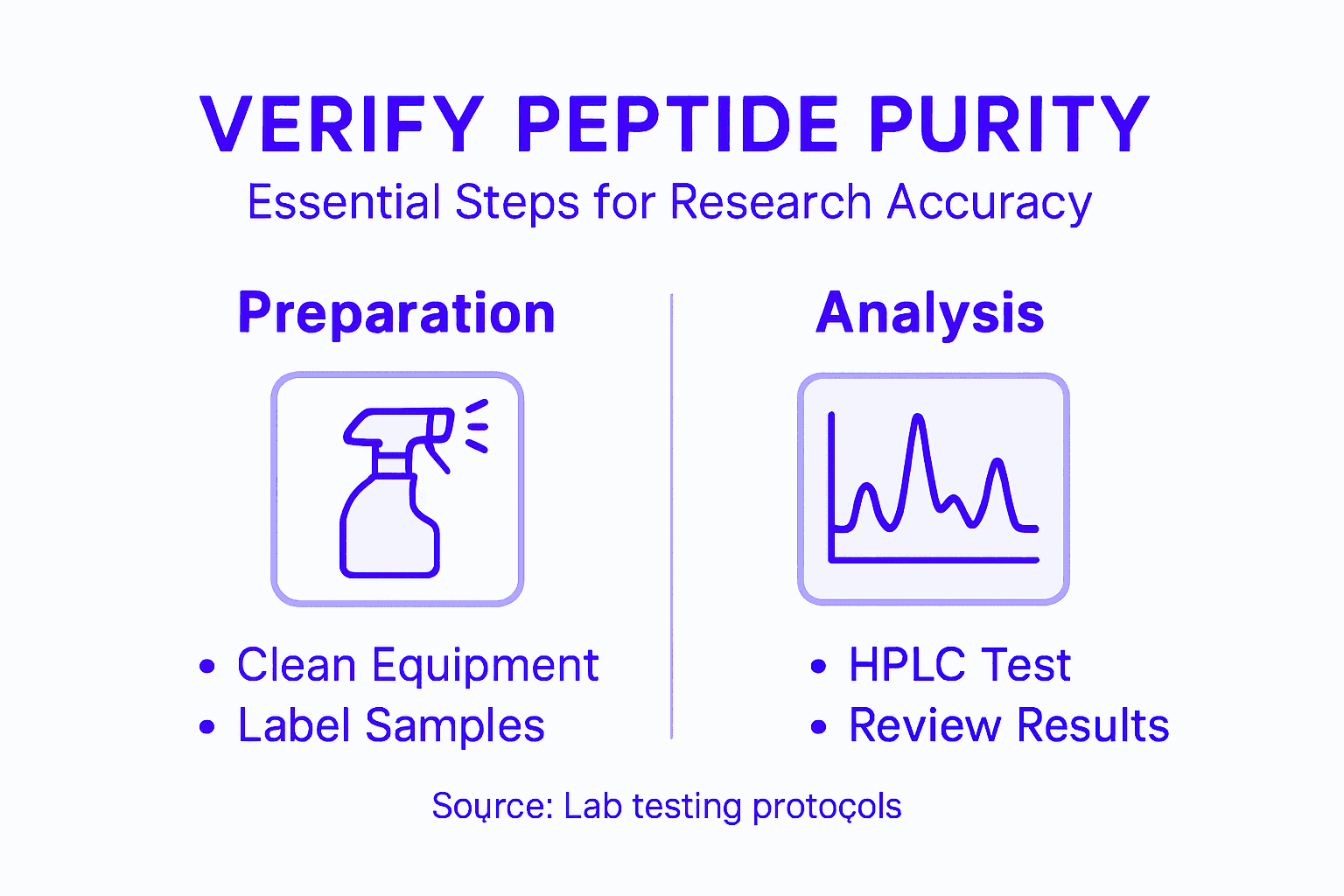
Here’s how major peptide purity testing methods compare:
Method | Sensitivity | Preferred Use Case |
HPLC | Very high | Routine peptide purity assessment |
Mass Spectrometry | Extremely high | Confirming molecular identity |
Amino Acid Analysis | Moderate | Sequence composition verification |
Capillary Electrophoresis | High | Impurity profiling |
NMR | High for structure | Peptide structure elucidation |
Precision in method selection is the cornerstone of reliable peptide purity verification.
Pro tip: Always cross-validate your purity testing results using two independent analytical methods to ensure maximum accuracy and reproducibility.
Step 4: Conduct HPLC or Mass Spectrometry Analysis
Analyzing peptide purity requires precise and sophisticated analytical techniques that can definitively characterize molecular composition and identify potential impurities. Your goal is to generate comprehensive data about the peptide’s molecular structure and purity level.
Peptide analysis workflows combine advanced chromatographic and spectrometric methods to ensure research-grade quality. For HPLC and Mass Spectrometry analysis, prepare and execute these critical steps:
Reversed-phase chromatography preparation
Proper instrument calibration
Sample preparation protocols
Detection wavelength settings
Data interpretation strategies
When conducting your analysis, follow these systematic procedures:
Prepare your peptide sample with molecular-grade solvents
Set up reversed-phase HPLC using a C18 column
Configure detection wavelength between 214-220 nm
Run mass spectrometry for molecular weight confirmation
Compare results against reference standards
Analytical techniques require meticulous attention to instrumental settings and sample preparation. Slight variations can significantly impact your results.
Precision in peptide analysis transforms raw data into meaningful scientific insights.
Pro tip: Always run duplicate analyses and compare results to ensure reproducibility and minimize potential systematic errors.

Step 5: Interpret Test Results to Confirm Peptide Purity
Interpreting peptide purity results requires a systematic approach to analyzing complex analytical data and translating technical measurements into meaningful scientific insights. Your goal is to confidently assess the molecular integrity of your peptide sample.
Peptide testing protocols demand precise evaluation of chromatographic and spectrometric data. Key aspects of results interpretation include:
Peak area quantification
Retention time analysis
Molecular weight confirmation
Impurity percentage calculation
Comparative standard assessment
When interpreting your test results, follow these critical evaluation steps:
Examine HPLC chromatogram peak distributions
Identify the primary peptide peak
Calculate relative peak areas
Compare molecular weight against expected values
Determine overall purity percentage
Analytical data interpretation requires a careful and systematic approach. Small variations can significantly impact your research conclusions.
Key factors for interpreting peptide purity data:
Factor | Why It Matters | Potential Impact |
Peak Area Ratio | Reflects main peptide content | Indicates actual sample purity |
Molecular Weight Match | Confirms sample identity | Ensures validity of results |
Retention Time Consistency | Shows process reproducibility | Detects handling inconsistencies |
Impurity Peaks | Reveals contaminants | May affect experimental outcome |
Reference Standard Comparison | Assures data quality | Enables reproducibility |
Precise result interpretation transforms raw data into actionable scientific knowledge.
Pro tip: Always maintain a standardized documentation process for your analytical results to ensure consistent and reproducible research standards.
Ensure Research Accuracy with Premier Aminos’ Verified Peptides
Verifying peptide purity is a critical step to guarantee reliable research outcomes. The article highlights challenges such as interpreting Certificates of Analysis and selecting precise purity testing methods. Researchers need trusted, lab-tested peptides with confirmed ≥99% purity to avoid experimental inconsistencies and ensure molecular integrity.
Premier Aminos specializes in providing exactly that. Our curated collection, including Research Peptides | Premier Aminos, offers products backed by third-party lab documentation and strict quality control. With fast U.S. shipping and bulk discounts, we support your demand for scientifically validated peptides.
Boost your research confidence today
Explore our full range of purity-guaranteed peptides at All Products | Premier Aminos and secure supplies that meet your stringent laboratory standards. Visit https://premieraminos.com now and make peptide purity verification effortless and reliable.
Frequently Asked Questions
How can I ensure the accuracy of my peptide purity verification?
To ensure accuracy in peptide purity verification, start by selecting appropriate analytical methods like High-Performance Liquid Chromatography (HPLC) or Mass Spectrometry. Additionally, cross-validate your results using at least two independent testing methods to confirm consistency.
What key components should I look for in a Certificate of Analysis for peptide samples?
When reviewing a Certificate of Analysis, focus on molecular weight verification, purity percentage, and amino acid sequence confirmation. Make sure to assess the issuing laboratory’s accreditation and compare the stated characteristics with your research requirements.
How can I prepare peptide samples to minimize contamination before testing?
To minimize contamination, clean and sterilize all work surfaces with 70% ethanol and wear sterile gloves. Allow the peptide samples to reach room temperature before handling, and gently centrifuge samples to collect any residual material.
What should I do if my peptide purity results show unexpected impurities?
If you find unexpected impurities in your peptide purity results, first re-evaluate your sample preparation and testing protocols for potential errors. Then, consider repeating the analysis to confirm the results and explore alternative purification methods if the issue persists.
How do I interpret the results from my HPLC analysis?
To interpret HPLC results, examine the chromatogram for peak distributions, identify the primary peptide peak, and calculate relative peak areas. Compare these values against expected molecular weights and purity percentages to assess the overall sample quality.
Why is meticulous documentation important during peptide purity testing?
Meticulous documentation is crucial as it supports traceability and reproducibility of your experimental results. Maintain detailed records of your preparation and testing processes to ensure that future analyses can be replicated accurately.
Recommended


Comments