

Lab-Tested Peptides: Validating Research Integrity

Updated: Sep 5

Finding reliable research materials can be a constant challenge for American biomedical scientists. With labs depending on molecular purity and documented quality to preserve experimental accuracy, the risks of impurities or incorrect sequences in peptides are real. This guide highlights how verified, lab-tested peptides support research integrity and outlines the essential concepts, testing protocols, and compliance strategies every U.S. laboratory needs.
Table of Contents
Key Takeaways
Point | Details |
Lab-tested Peptides Ensure Research Integrity | Rigorous quality control and third-party testing verify molecular purity and structural integrity, providing reliable research materials. |
Critical Categories of Peptides | Various peptide types, including bioactive and therapeutic, serve specific research functions, enhancing experimental focus and relevance. |
Importance of Certificates of Analysis | Always request and review the Certificate of Analysis to verify quality metrics before starting research to ensure accurate outcomes. |
Risks of Non-tested Peptides | Utilizing non-tested peptides can compromise research reliability, leading to invalid data and potential reputational damage for researchers. |
What Are Lab-Tested Peptides? Essential Concepts
Lab-tested peptides represent precision-engineered molecular compounds designed specifically for scientific research, characterized by rigorous quality control and extensive validation processes. These specialized amino acid sequences serve as critical research tools across biomedical disciplines, enabling researchers to conduct experiments with unprecedented accuracy and reproducibility.
At their core, lab-tested peptides undergo comprehensive third-party testing protocols that verify critical quality parameters such as molecular purity, structural integrity, and chemical composition. Purity standards in laboratory peptides are paramount, with most research-grade peptides requiring a minimum of 99% molecular purity to ensure reliable scientific outcomes.
The validation process for lab-tested peptides typically involves multiple sophisticated analytical techniques:
Mass spectrometry for precise molecular weight confirmation
High-performance liquid chromatography (HPLC) to assess peptide composition
Nuclear magnetic resonance (NMR) spectroscopy to verify three-dimensional structural characteristics
Amino acid sequence analysis to confirm exact molecular configuration
Researchers rely on these meticulous testing procedures to guarantee that peptides meet stringent scientific standards. Sourcing and third-party testing play a critical role in maintaining research integrity, providing scientists with confidence in their experimental materials.
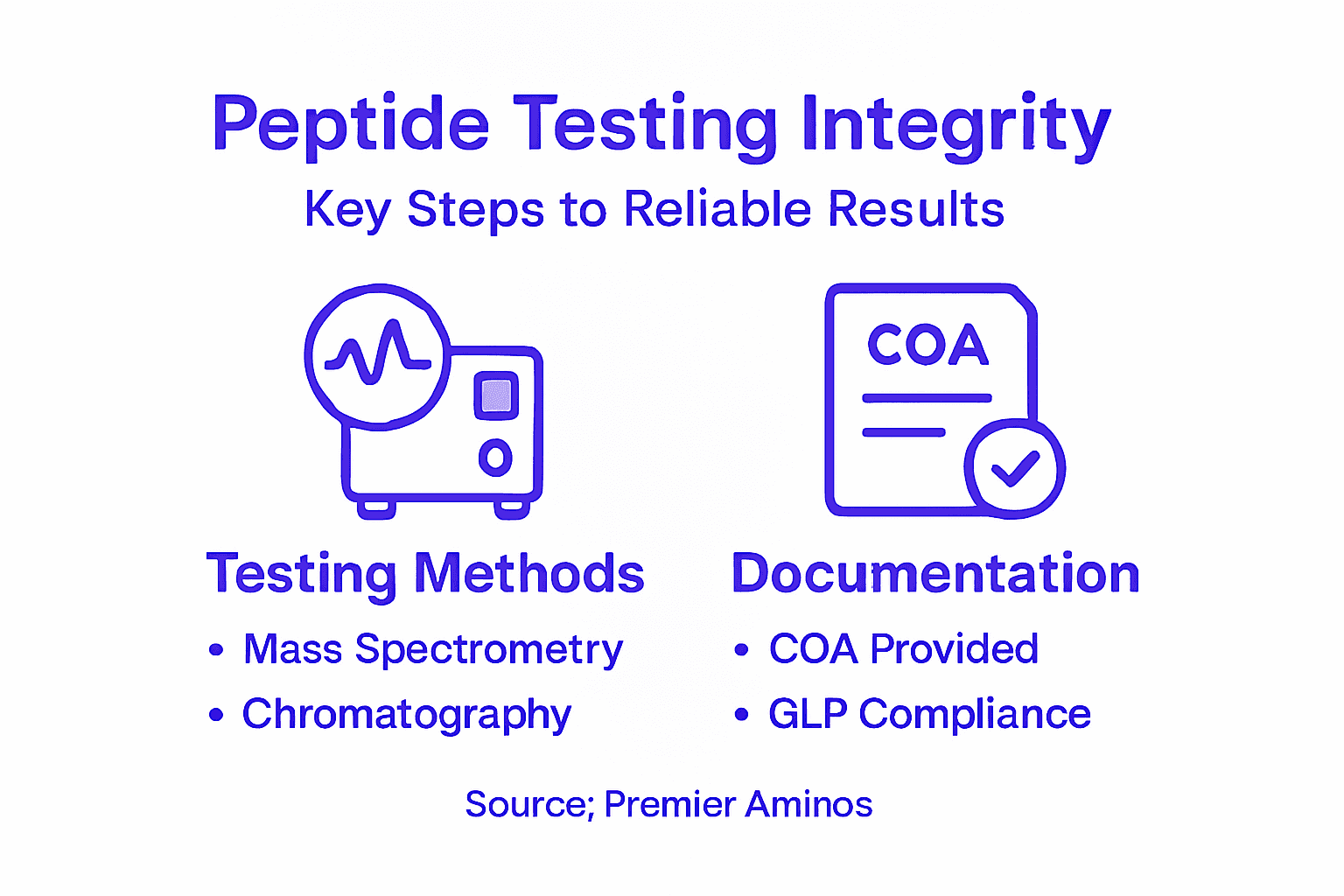
Pro tip: Always request and review the Certificate of Analysis (COA) for peptide research materials to verify comprehensive quality metrics before commencing your scientific investigation.
Types of Peptides Used in Research Laboratories
Research laboratories utilize a diverse range of peptides with specialized applications across multiple scientific disciplines. These molecular compounds are meticulously designed to address specific research objectives, ranging from fundamental biological investigations to advanced pharmaceutical development.
Key categories of peptides used in scientific research include:
Bioactive peptides: Molecules that interact with biological systems to trigger specific cellular responses
Signaling peptides: Compounds that facilitate communication between cells and regulate physiological processes
Synthetic peptides: Artificially engineered sequences created for targeted research purposes
Therapeutic peptides: Potential drug candidates designed to interact with specific molecular targets
Structural peptides: Compounds used to understand protein folding and molecular interactions
Researchers carefully select peptide procurement strategies to ensure the highest quality and most appropriate molecular compounds for their specific experimental requirements. The selection process involves rigorous evaluation of peptide characteristics, including molecular weight, amino acid sequence, purity levels, and potential research applications.
Advanced research institutions often categorize peptides based on their specific functional properties and research potential. These peptides undergo extensive labeling and verification protocols to guarantee their molecular integrity and research applicability across various scientific domains.
Here’s a summary of peptide types and their primary research roles:
Peptide Type | Main Function | Typical Laboratory Application |
Bioactive Peptides | Trigger cellular responses | Study of physiological processes |
Signaling Peptides | Cell communication | Analysis of signaling pathways |
Synthetic Peptides | Engineered for research | Targeted molecular investigations |
Therapeutic Peptides | Drug candidate molecules | Pharmaceutical development |
Structural Peptides | Protein folding analysis | Understanding molecular interactions |
Peptide selection is a critical step that directly impacts the reliability and reproducibility of scientific research.
Pro tip: Develop a comprehensive procurement checklist that includes molecular specifications, purity requirements, and intended research applications to streamline your peptide selection process.
Purity Standards and Third-Party Testing Explained
Purity standards represent the cornerstone of scientific reliability in peptide research, establishing critical benchmarks for molecular quality and experimental reproducibility. Third-party testing provides an independent verification mechanism that ensures peptides meet the most stringent scientific standards, protecting the integrity of research across diverse scientific disciplines.
Key analytical methods for verifying peptide purity include:
High-Performance Liquid Chromatography (HPLC): Separates and quantifies molecular components with exceptional precision
Mass Spectrometry: Determines exact molecular weight and chemical composition
Nuclear Magnetic Resonance (NMR) Spectroscopy: Validates three-dimensional molecular structures
Amino Acid Sequence Analysis: Confirms precise molecular configuration
Research peptide procurement strategies typically require comprehensive documentation demonstrating molecular integrity. Professional research suppliers generate Certificates of Analysis (COAs) that comprehensively document each peptide batch’s identity, purity percentage, molecular characteristics, and potential research applications.
Third-party testing represents an essential quality control mechanism that transcends internal laboratory capabilities, providing an objective assessment of peptide molecular standards.
Research institutions demand rigorous purity benchmarks, with most advanced laboratories requiring peptides that demonstrate ≥99% molecular purity. This extremely high standard ensures minimal contaminants that could potentially compromise experimental outcomes or introduce unexpected variables into scientific investigations.

Pro tip: Always request and thoroughly review the complete Certificate of Analysis before incorporating peptides into your research protocols, paying close attention to purity percentages and analytical testing methodologies.
How Documentation Ensures Traceability and Compliance
Documentation serves as the critical backbone of scientific research, creating an unbroken chain of accountability that validates the integrity of peptide research from initial procurement through final experimental analysis. By establishing comprehensive record-keeping protocols, research institutions can meticulously track every molecular compound’s origin, composition, and potential variations.
Key documentation components that ensure traceability include:
Batch-specific identification numbers
Detailed molecular composition reports
Storage and handling documentation
Transportation and shipping records
Quality control testing certificates
Research laboratories implement peptide procurement strategies that mandate rigorous documentation standards. These strategies create a transparent audit trail that allows scientists to reconstruct experimental conditions, verify molecular characteristics, and validate research findings with unprecedented precision.
Comprehensive documentation transforms scientific materials from anonymous compounds into traceable, accountable research resources.
Compliance documentation typically encompasses multiple regulatory frameworks, including Good Laboratory Practice (GLP) standards, institutional research protocols, and federal research guidelines. Each document serves as a critical verification point, ensuring that peptide research maintains the highest levels of scientific integrity and reproducibility.
Pro tip: Develop a standardized digital documentation system that automatically logs critical research metadata, enabling seamless tracking and rapid retrieval of molecular compound information.
Risks of Non-Tested Peptides for Research Outcomes
Non-tested peptides represent a significant scientific vulnerability that can fundamentally compromise research integrity and experimental reliability. Molecular impurities in unverified peptide compounds can introduce unpredictable variables that potentially invalidate entire research projects, creating substantial risks for scientific investigations across multiple disciplines.
Critical risks associated with non-tested peptides include:
Sequence inaccuracies that alter molecular functionality
Unexpected contaminant interactions
Compromised experimental reproducibility
Potential immunogenic responses
Invalid statistical data interpretation
Immunogenicity risk assessment demonstrates that uncharacterized peptides can trigger unintended immune system responses. These unexpected reactions can fundamentally distort research outcomes, rendering experimental data potentially unreliable or completely invalid.
Unverified peptides are not merely a minor scientific inconvenience, but a critical threat to research credibility and scientific advancement.
Scientific literature consistently emphasizes that comprehensive molecular characterization is essential. Researchers who rely on non-tested peptides risk publishing potentially flawed findings, which can damage professional reputation and waste significant research resources.
This table highlights risks of using non-tested peptides compared to lab-tested standards:
Risk Factor | Non-Tested Peptides | Lab-Tested Peptides |
Sequence Accuracy | Potential errors | Precisely verified |
Contaminant Presence | High risk | Minimized by purity testing |
Reproducibility | Often compromised | Consistently reliable |
Data Integrity | May be invalid | Maintained with documentation |
Immunogenic Responses | Increased likelihood | Extremely rare |
Pro tip: Implement a strict zero-tolerance policy for peptide sources that cannot provide comprehensive, third-party verified Certificates of Analysis with complete molecular characterization.
Choosing a Reliable Supplier: Key Criteria
Selecting a peptide supplier represents a critical decision that directly impacts research integrity and experimental outcomes. Scientific procurement demands meticulous evaluation of multiple factors to ensure the highest standards of molecular quality and research reliability.
Crucial criteria for evaluating peptide suppliers include:
Comprehensive third-party testing documentation
Proven ≥99% molecular purity standards
Detailed Certificates of Analysis (COAs)
Research-only compliance certifications
Transparent quality control processes
Secure packaging and shipping protocols
Research peptide supplier selection requires a systematic approach that goes beyond simple price comparisons. Researchers must prioritize suppliers who demonstrate unwavering commitment to scientific standards, molecular precision, and comprehensive documentation.
The quality of your research is fundamentally determined by the quality of your molecular compounds.
Advanced research institutions implement rigorous supplier evaluation protocols that assess not just product quality, but also vendor transparency, customer support, and long-term reliability. A truly dependable peptide supplier should provide extensive documentation, responsive technical support, and consistent batch-to-batch molecular integrity.
Pro tip: Request comprehensive documentation, including detailed Certificates of Analysis, and conduct a thorough review of the supplier’s quality control processes before finalizing any procurement decisions.
Ensure Research Integrity with Premier Aminos’ Lab-Tested Peptides
When your research depends on the highest standards of peptide purity and validated data, compromise is not an option. The challenges of non-tested peptides such as sequence inaccuracies and contaminant risks can undermine your work and threaten reproducibility. That is why sourcing only from trusted suppliers who provide comprehensive Certificates of Analysis and third-party validation is essential to safeguarding your experimental results.
Premier Aminos specializes in delivering ≥99% purity, research-grade peptides designed for professionals in laboratories and research institutions. Explore our carefully curated range like Research Peptides and our full selection of All Products, each backed by detailed documentation and fast U.S. shipping. Our commitment to reliability and scientific rigor helps you avoid the risks associated with untested peptides so you can focus on advancing your research.
Choose Premier Aminos today to secure your supply chain with peptides tested to meet the highest standards. Visit Premier Aminos now to review product options and obtain molecular compounds that support traceability, compliance, and confidence in your research outcomes.
Frequently Asked Questions
What are lab-tested peptides?
Lab-tested peptides are precision-engineered molecular compounds that undergo rigorous quality control and validation processes to ensure purity, structural integrity, and chemical composition for scientific research.
Why is molecular purity important in lab-tested peptides?
Molecular purity is crucial as it ensures reliable scientific outcomes. Most research-grade peptides require a minimum of 99% purity to minimize contaminants that could compromise experimental results.
How are lab-tested peptides validated for research use?
Validation involves multiple analytical techniques, including mass spectrometry, high-performance liquid chromatography (HPLC), nuclear magnetic resonance (NMR) spectroscopy, and amino acid sequence analysis, to confirm molecular characteristics and integrity.
What documentation should I request when procuring lab-tested peptides?
Always request a Certificate of Analysis (COA) that verifies the peptide’s identity, purity percentage, molecular characteristics, and complies with third-party testing for quality assurance.
Recommended


Comments