

Peptide Purity Standards: Impact on Research Integrity

Updated: Sep 5
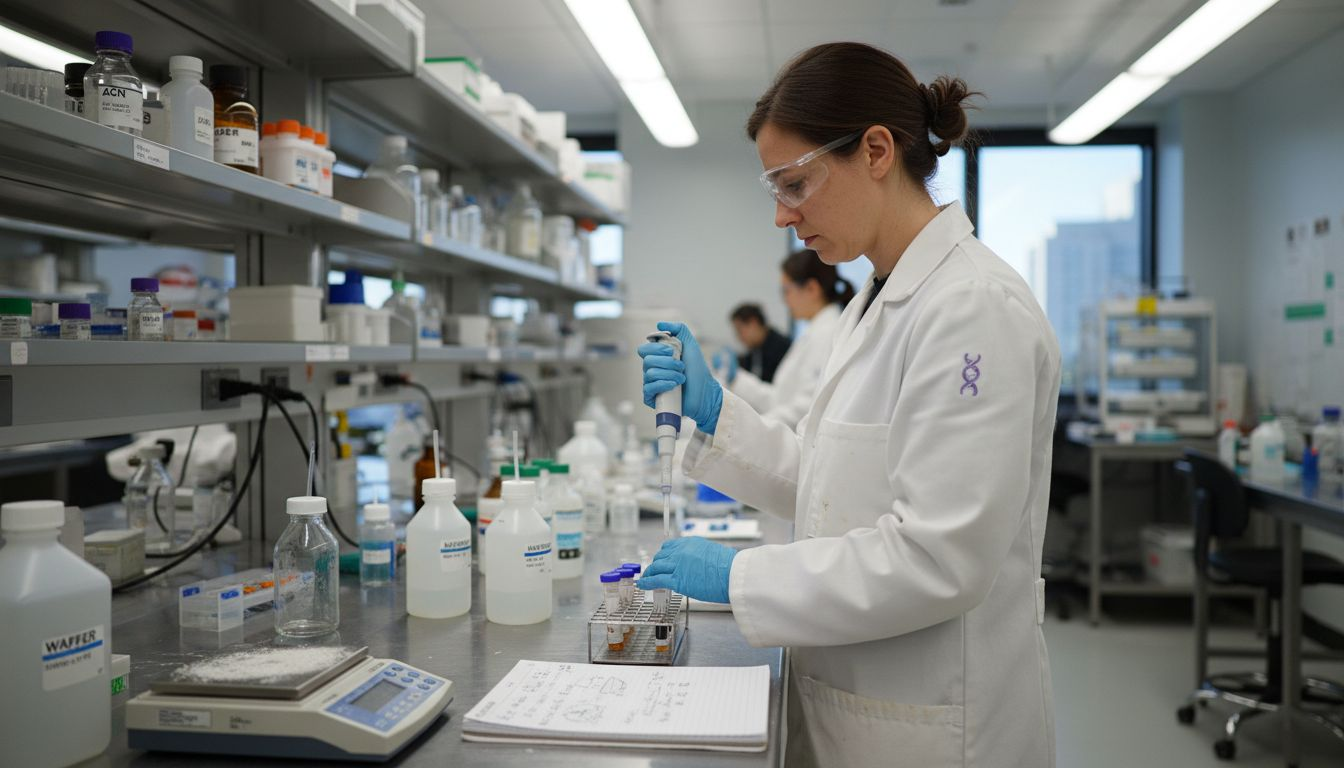
Ensuring every peptide sample meets strict purity standards is not just a technical requirement. For Research scientists and Lab technicians at American biomedical institutions, these benchmarks form the backbone of credible experimental work and reliable data. Even minor impurities—from deletion variants to oxidation derivatives—can disrupt biological activity and skew results, making rigorous quality control vital for advancing scientific investigations. Discover how effective impurity profiling and comprehensive analytical methods protect your research from hidden variables.
Table of Contents
Key Takeaways
Point | Details |
Importance of Peptide Purity Standards | Researchers rely on peptide purity standards to ensure credibility and reproducibility in scientific investigations. Strict measurement criteria are essential for maintaining the integrity of peptide samples. |
Types of Impurities | Common impurities like truncated sequences and oxidation derivatives can significantly affect experimental outcomes. Comprehensive profiling is crucial for understanding and mitigating these risks. |
Verification Methods | Multiple advanced analytical techniques such as HPLC and mass spectrometry are necessary to accurately measure and verify peptide purity. Utilizing a combination of these methods helps ensure reliable results. |
Role of Certificates of Analysis | Certificates of Analysis (COAs) provide critical documentation of peptide quality, including molecular weight and purity percentage. Thoroughly reviewing COAs helps researchers maintain high standards of research integrity. |
What Peptide Purity Standards Really Mean
Researchers rely on peptide purity standards as a critical benchmark for maintaining scientific credibility and experimental reproducibility. These rigorous quality metrics define the precise chemical composition and integrity of peptide samples, ensuring researchers can trust their foundational research materials. By establishing strict measurement criteria, purity standards create a reliable framework for scientific investigation.
Peptide purity is typically quantified through several key parameters:
Chemical composition verified through mass spectrometry
Amino acid sequence accuracy confirmed via sequencing techniques
Contaminant levels measured at microscopic percentages
Molecular weight consistency validated through advanced analytical methods
Understanding these standards is crucial because even minor impurities can dramatically skew experimental results. Peptide labeling standards provide researchers with a comprehensive mechanism for tracking and documenting peptide quality throughout the research process. Precise documentation helps eliminate potential variability that could compromise scientific findings.
Quality assessment involves multiple sophisticated analytical techniques, including high-performance liquid chromatography (HPLC), mass spectrometry, and elemental analysis. These methods allow researchers to detect and quantify impurities at incredibly minute levels, often measuring contaminants in fractions of a percentage point. Stringent testing protocols ensure that peptides meet the exacting standards required for advanced scientific research.
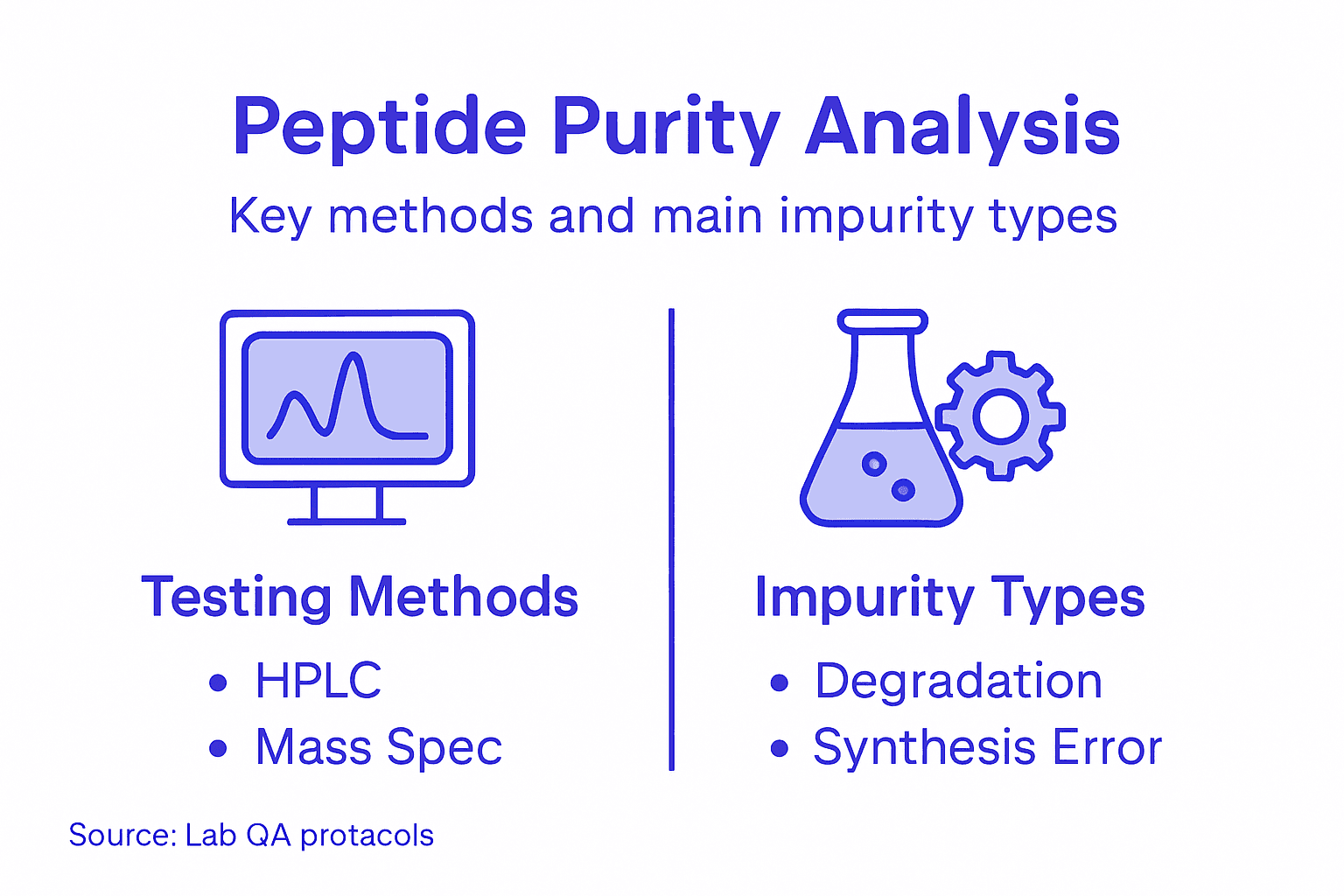
Pro tip: Always request and review a comprehensive Certificate of Analysis (COA) when obtaining peptides to verify precise purity metrics and confirm the sample meets your specific research requirements.
Types of Impurities in Research Peptides
Research peptides can contain multiple complex impurity types that significantly impact experimental outcomes. Synthesis-related peptide impurities emerge during production processes and can fundamentally alter peptide characteristics, potentially compromising scientific research integrity. Understanding these impurities is crucial for maintaining reliable experimental results.
The primary categories of peptide impurities include:
Truncated sequences: Peptides with incomplete amino acid chains
Deletion variants: Missing amino acid segments
Insertion mutations: Unexpected additional amino acid residues
Racemization products: Altered amino acid stereochemistry
Oxidation derivatives: Chemical modifications due to oxidative stress
Aggregation complexes: Molecular clustering and unintended peptide interactions
Some impurities arise directly from synthesis techniques, while others develop through post-production degradation mechanisms. Researchers must employ sophisticated analytical methods like high-performance liquid chromatography and mass spectrometry to detect and quantify these microscopic variations. Each impurity type represents a potential source of experimental variability that could lead to misleading scientific conclusions.
Advanced characterization techniques allow scientists to map these impurities with extraordinary precision. Impurity profiling in peptide medicines reveals complex interactions between molecular structures, demonstrating how even minute contaminants can dramatically influence research outcomes. Comprehensive quality control remains the most reliable strategy for ensuring peptide research reliability.

Here is a summary table highlighting differences between synthesis-related impurities and degradation-related impurities in peptides:
Impurity Origin | Example Type | Typical Effect on Peptide |
Synthesis Process | Racemization products | Alters structure and activity |
Degradation Process | Oxidation derivatives | Reduces peptide stability |
Synthesis Process | Truncated sequences | Weakens biological function |
Degradation Process | Aggregation complexes | Hinders accurate testing |
Pro tip: Implement multiple analytical screening methods to comprehensively assess peptide purity and minimize potential experimental variability.
How Purity Is Measured and Verified
Researchers employ multiple sophisticated analytical techniques to measure and verify peptide purity with exceptional precision. Purity in laboratory peptides demands comprehensive testing protocols that assess molecular composition, chemical integrity, and potential contaminants through advanced technological approaches.
Key measurement methodologies include:
High-Performance Liquid Chromatography (HPLC): Separates and quantifies peptide components
Mass Spectrometry: Determines precise molecular weight and structural composition
Elemental Analysis: Verifies chemical elemental ratios
Amino Acid Sequencing: Confirms accurate peptide sequence
Spectroscopic Techniques: Evaluates molecular interactions and structural characteristics
Capillary Electrophoresis: Separates molecular variants with high resolution
Each analytical method provides unique insights into peptide quality, targeting different aspects of molecular composition. Researchers typically employ multiple techniques to cross-validate results, ensuring a comprehensive understanding of peptide purity. These sophisticated approaches allow scientists to detect impurities at microscopic levels, often identifying contaminants present in fractions of a percentage point.
To help clarify how common analytical methods contribute to peptide purity verification, here’s a comparison table:
Analytical Method | Main Purpose | Typical Impact on Research |
HPLC | Separates peptide components | Detects subtle impurities affecting data |
Mass Spectrometry | Identifies molecular weight | Confirms peptide identity with precision |
Elemental Analysis | Verifies chemical composition | Ensures consistent sample quality |
Amino Acid Sequencing | Checks sequence accuracy | Reduces risk of incorrect results |
Comprehensive verification requires a multi-step approach that combines instrumental analysis with rigorous documentation. Laboratories generate detailed Certificates of Analysis (COAs) that document precise purity metrics, providing researchers with transparent, quantitative evidence of peptide quality. This systematic verification process helps maintain the highest standards of scientific integrity and experimental reproducibility.
Pro tip: Request comprehensive Certificates of Analysis that detail multiple analytical testing methods to ensure the most reliable peptide quality assessment.
Certificates of Analysis and Lab Transparency
Certificates of Analysis (COAs) represent the gold standard for ensuring peptide research integrity and providing comprehensive documentation of product quality. Lab-tested peptides demand rigorous verification processes that go beyond simple purity measurements, offering researchers transparent insights into molecular composition and potential variations.
Key components of a comprehensive Certificate of Analysis typically include:
Molecular Weight Verification: Precise mass spectrometry results
Purity Percentage: Detailed HPLC chromatography measurements
Amino Acid Composition: Sequencing analysis confirming structural integrity
Chemical Characterization: Elemental analysis and structural confirmation
Batch-Specific Identification: Unique tracking numbers and production details
Testing Methodology: Specific analytical techniques employed
Transparency in laboratory testing extends far beyond simple documentation. Researchers require detailed, scientifically validated information that allows them to understand exactly what they are working with and assess potential experimental variables. This level of detailed reporting helps prevent reproducibility issues and ensures that scientific conclusions are based on well-characterized research materials.
Independent third-party testing adds an additional layer of credibility to Certificates of Analysis. By utilizing external laboratories with no direct connection to the peptide production process, research institutions can obtain unbiased, objective assessments of molecular quality. These comprehensive verification processes represent a critical mechanism for maintaining the highest standards of scientific research integrity.
Pro tip: Always cross-reference multiple analytical parameters in Certificates of Analysis and verify the credentials of the testing laboratory to ensure maximum research reliability.
Regulatory Compliance and Legal Considerations
Research peptide development involves navigating a complex landscape of regulatory requirements that ensure scientific integrity and product safety. Regulatory considerations for synthetic peptides create a comprehensive framework that governs every aspect of peptide research and production.
Key regulatory compliance dimensions include:
Manufacturing Standards: Adherence to Good Manufacturing Practices (GMP)
Quality Control: Rigorous testing and documentation protocols
Impurity Profiling: Detailed characterization of molecular variations
Traceability: Comprehensive batch tracking and record-keeping
Safety Documentation: Extensive risk assessment and reporting
International Guideline Alignment: Compliance with ICH and FDA standards
The regulatory environment demands meticulous attention to detail, with multiple international agencies establishing increasingly sophisticated oversight mechanisms. Researchers must navigate complex guidelines that require comprehensive documentation of peptide identity, purity, and potential molecular variations. These standards are designed to prevent potential research inconsistencies and ensure that scientific conclusions can be reliably reproduced across different laboratory settings.
Complex legal frameworks surrounding peptide research reflect the scientific community’s commitment to maintaining the highest standards of experimental integrity. Regulatory bodies continuously update their guidelines to accommodate emerging research methodologies and technological advancements, creating a dynamic environment that challenges researchers to maintain exceptional standards of precision and transparency.
Pro tip: Maintain comprehensive documentation and stay updated on the latest international regulatory guidelines to ensure seamless research compliance.
Risks of Low-Purity Peptides in Research
Low-purity peptides represent a significant threat to scientific research, potentially undermining years of meticulous experimental work. Peptide procurement strategies are critical for preventing contamination that can introduce substantial variability and compromise research outcomes.
The primary risks associated with low-purity peptides include:
Experimental Inconsistency: Unpredictable molecular interactions
False Positive/Negative Results: Skewed research conclusions
Biological Activity Variations: Unreliable performance metrics
Structural Misrepresentation: Inaccurate molecular characterization
Cross-Contamination: Potential introduction of unintended molecular variants
Reduced Reproducibility: Challenges in replicating scientific findings
Researchers must recognize that even microscopic impurities can dramatically alter experimental results. Contaminants may introduce unexpected chemical interactions, modify protein binding characteristics, or create molecular variations that fundamentally change research outcomes. These subtle differences can transform what appears to be a promising scientific discovery into a misleading or entirely invalid conclusion.
Comprehensive quality control becomes paramount in mitigating these risks. Sophisticated analytical techniques like high-performance liquid chromatography, mass spectrometry, and elemental analysis provide researchers with the tools to detect and quantify potential molecular variations. By implementing rigorous testing protocols, scientists can minimize the potential for experimental error and maintain the highest standards of research integrity.
Pro tip: Always request and thoroughly review comprehensive Certificates of Analysis before incorporating peptides into research protocols to minimize potential experimental variability.
Ensure Your Research Integrity with Premier Aminos’ Purity-Guaranteed Peptides
The article highlights the critical challenge researchers face with peptide purity standards and the risks posed by low-purity peptides, such as experimental inconsistency and compromised scientific outcomes. At Premier Aminos, we address this pain point by offering rigorously tested peptides with clear Certificates of Analysis ensuring ≥99% purity, precise labeling, and compliance with research-only use. When your experiments demand reliability and transparency, you need a trusted supplier who delivers peptides that meet the highest standards including synthesis-related impurity profiling and comprehensive lab verification.
Discover our extensive catalog designed for accurate, reproducible research results available at Research Peptides | Premier Aminos. See all our peptide options tested through independent labs at All Products | Premier Aminos. For solutions targeting lean mass research with verified purity, explore Lean Mass | Premier Aminos.
Choose Premier Aminos today and avoid the costly setbacks of impure peptides. Visit https://premieraminos.com to access lab-tested, purity-guaranteed peptides shipped fast across the U.S. Secure your research integrity now by browsing our products and requesting detailed Certificates of Analysis with every order.
Frequently Asked Questions
What are peptide purity standards?
Peptide purity standards are benchmarks that define the chemical composition and integrity of peptide samples, ensuring researchers can trust their materials for reliable experimental outcomes.
How is peptide purity measured and verified?
Peptide purity is measured using various analytical techniques such as High-Performance Liquid Chromatography (HPLC), mass spectrometry, and amino acid sequencing to assess molecular composition and detect impurities.
What types of impurities can affect peptide research?
Common impurities include truncated sequences, deletion variants, insertion mutations, racemization products, oxidation derivatives, and aggregation complexes, all of which can significantly impact experimental results.
Why is it important to request a Certificate of Analysis (COA) for peptides?
A Certificate of Analysis (COA) provides detailed documentation of a peptide’s molecular weight, purity percentage, amino acid composition, and testing methodologies, ensuring researchers have transparent and reliable information for their experiments.
Recommended


Comments