

Research-Only Peptides: Ensuring Quality for Labs

Updated: Sep 5

Finding authentic, high-purity research-only peptides can be an ongoing challenge for American biomedical scientists facing strict compliance demands. Misconceptions about laboratory peptides and their legal use may blur critical distinctions, risking both experimental success and regulatory standing. This article clarifies key definitions, purity standards, legal frameworks, and the risks tied to improper sourcing, supporting scientists in making informed, validated choices for their research protocols.
Table of Contents
Key Takeaways
Point | Details |
Research-Only Peptides Are Not For Human Use | These peptides are strictly for scientific research and have not been approved for therapeutic applications. |
Importance of Certificates of Analysis | Comprehensive COAs are essential for verifying purity, molecular composition, and ensuring reliable experimental outcomes. |
Legal Compliance Is Critical | Adhering to regulatory guidelines is crucial for maintaining ethical research practices and protecting institutional integrity. |
Risks of Improper Sourcing | Inadequate sourcing can compromise research integrity and lead to significant legal and professional repercussions. |
Defining Research-Only Peptides and Common Misconceptions
Research-only peptides are specialized biochemical compounds designed exclusively for scientific investigation, not human consumption or medical treatment. These synthetic amino acid chains serve critical functions in laboratory research, enabling scientists to explore complex biological mechanisms with precision and controlled experimental parameters.
Understanding the core characteristics of research-only peptides requires distinguishing them from other biological compounds:
Manufactured under strict laboratory conditions
Guaranteed ≥99% molecular purity
Produced with meticulous quality control standards
Intended solely for in-vitro and experimental research
Not approved for human or animal therapeutic use
Misconceptions often arise about the nature and applications of these specialized peptides. Many researchers mistakenly believe that research-only peptides can be used interchangeably with pharmaceutical compounds, which is fundamentally incorrect. Validating research peptide integrity requires understanding their specific limitations and rigorous scientific protocols.
Scientific institutions demand comprehensive documentation when working with research peptides, including detailed certificates of analysis that demonstrate molecular composition, purity levels, and potential trace contaminants. These documents represent critical quality assurance mechanisms that protect experimental validity and ensure reproducible research outcomes.
Pro tip: Always verify the source and third-party testing credentials of research peptides before incorporating them into any scientific protocol.
Key Types of Research-Only Peptides Explained
Research-only peptides encompass a diverse range of synthetic amino acid sequences designed for specialized scientific investigations. These compounds are meticulously engineered to support experimental research across multiple disciplines, providing researchers with precise molecular tools for exploring complex biological interactions.
The primary categories of research-only peptides include:
Bioactive Peptides: Short amino acid sequences that trigger specific cellular responses
Signaling Peptides: Molecules that facilitate intercellular communication
Structural Peptides: Compounds used to study protein folding and interactions
Fragment Peptides: Partial protein sequences used for targeted research
Synthetic Analogs: Engineered peptides with modified molecular structures
Each peptide type serves unique research purposes, requiring precise research peptide validation to ensure experimental integrity. Bioactive peptides, for instance, can simulate hormonal interactions or trigger specific metabolic pathways without the complexity of full protein molecules.
Researchers must understand the nuanced differences between peptide categories, as molecular variations can significantly impact experimental outcomes. Synthetic analogs provide particularly valuable research opportunities by allowing scientists to manipulate molecular structures and explore hypothetical biological mechanisms with unprecedented precision.

Here’s a concise summary comparing the major types of research-only peptides and their core scientific uses:
Peptide Type | Main Function | Typical Research Application | Unique Attribute |
Bioactive | Triggers cellular responses | Simulate hormone or enzyme systems | Highly targeted molecular effects |
Signaling | Facilitates communication | Study cell signaling pathways | Initiates biochemical signaling |
Structural | Studies protein fold/interactions | Analyze protein conformation and assembly | Reveals folding dynamics |
Fragment | Provides partial protein sequences | Map functional protein regions | Enables focused sequence testing |
Synthetic Analog | Alters molecular structure | Test hypothetical or engineered mechanisms | Customizable molecular design |
Pro tip: Consult comprehensive molecular characterization documents to understand the specific properties and potential limitations of each research-only peptide type.
Purity Standards and Independent Lab Validation
Research-only peptides demand rigorous purity standards that go far beyond typical laboratory quality control measures. These exacting requirements ensure that scientific investigations rely on molecular compounds with exceptional precision, consistency, and reproducibility across experimental protocols.
The critical validation parameters for research peptides include:
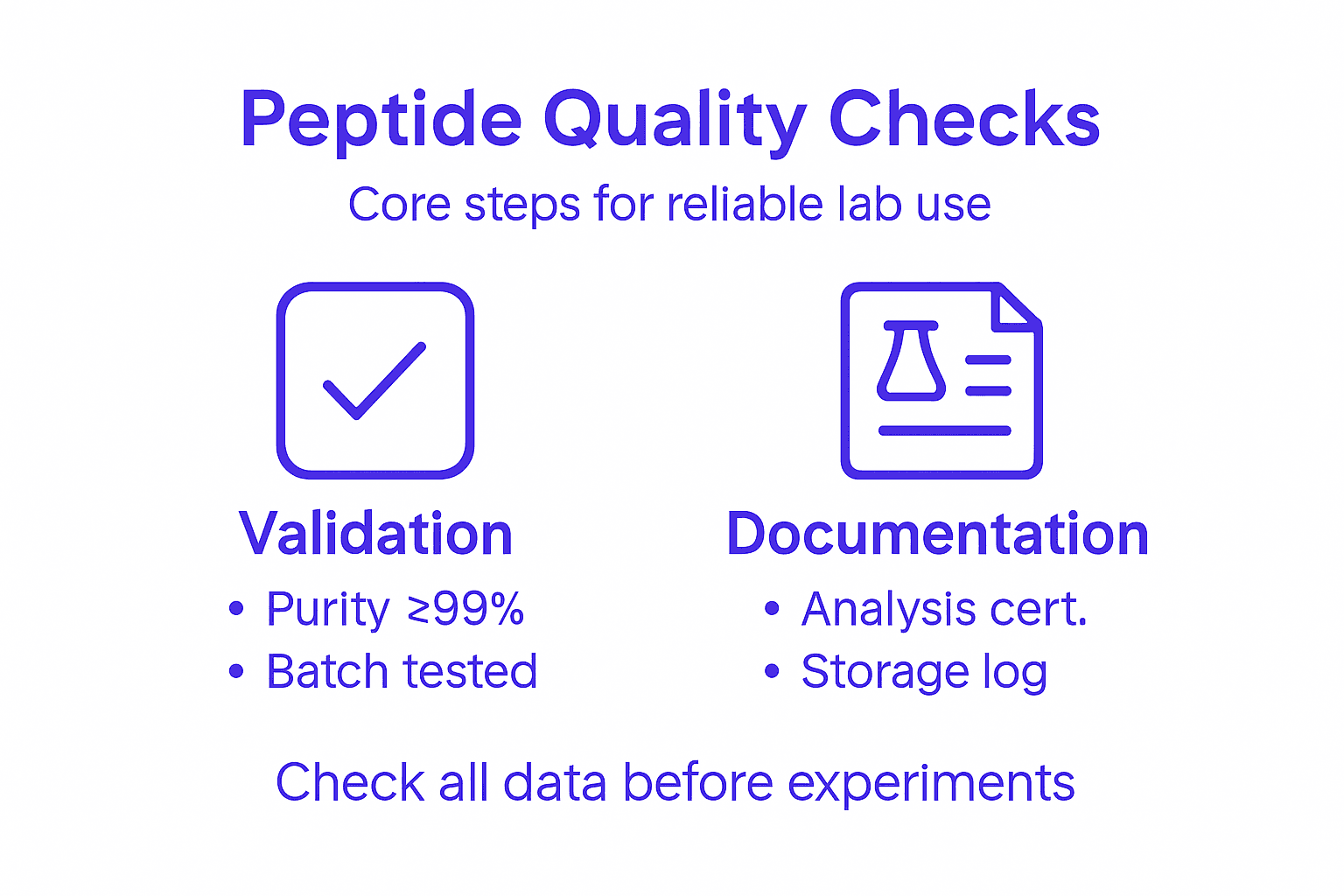
Minimum molecular purity of ≥99%
Comprehensive spectroscopic analysis
High-performance liquid chromatography (HPLC) testing
Mass spectrometry verification
Detailed chemical composition documentation
Independent laboratory studies confirm the importance of third-party validation in maintaining scientific integrity. These external assessments provide researchers with objective verification of peptide quality, ensuring that molecular specifications match original research design parameters.
Most scientific institutions require multiple layers of validation, including molecular weight confirmation, amino acid sequence verification, and comprehensive impurity profiling. Advanced analytical techniques like nuclear magnetic resonance (NMR) spectroscopy and elemental analysis further enhance the precision of peptide characterization, providing researchers with unprecedented confidence in their experimental materials.
Third-party validation represents the gold standard for ensuring research peptide reliability and scientific reproducibility.
Pro tip: Request and thoroughly review comprehensive certificates of analysis for every research peptide batch, paying special attention to purity percentages and detailed molecular characterization reports.
Legal Restrictions and Compliance for Lab Use
Research-only peptides operate within a complex legal framework that demands strict adherence to regulatory guidelines and institutional protocols. Scientists must navigate a intricate landscape of legal restrictions designed to ensure ethical research practices and prevent potential misuse of specialized biochemical compounds.
Key legal compliance requirements for research peptides include:
Exclusive procurement for scientific research purposes
Explicit labeling as “Research Use Only”
Documented institutional review board (IRB) approvals
Restricted distribution within authorized research environments
Comprehensive documentation of acquisition and usage
Peptide legal regulations emphasize the critical importance of maintaining clear boundaries between research investigation and potential human or animal applications. Regulatory bodies like the Food and Drug Administration (FDA) enforce stringent guidelines to prevent unauthorized distribution or misappropriation of these specialized molecular compounds.
Scientific institutions must implement robust compliance protocols that include detailed record-keeping, secure storage mechanisms, and strict access controls. These measures not only satisfy legal requirements but also protect the integrity of scientific research by ensuring that peptides remain within controlled research environments.
Compliance is not optional - it is a fundamental requirement for responsible scientific investigation.
Pro tip: Maintain comprehensive documentation of peptide acquisition, storage, and experimental usage to demonstrate ongoing regulatory compliance and institutional accountability.
Proper Documentation and Certificates of Analysis
Certificates of Analysis (COAs) represent the gold standard of documentation integrity for research-only peptides, providing comprehensive molecular verification that is critical for scientific reproducibility and experimental validity. These essential documents serve as comprehensive records that communicate precise details about peptide composition, purity, and quality control parameters.
A robust Certificate of Analysis typically includes:
Exact molecular weight verification
Amino acid sequence confirmation
Precise purity percentage (minimum ≥99%)
Batch-specific identification number
Spectroscopic analysis results
Chromatographic data profiles
Detailed manufacturing date and expiration information
Independent laboratory testing credentials
Researchers must scrutinize these documents carefully, understanding that each section provides critical insights into the peptide’s molecular characteristics. Research peptide validation requires meticulous examination of COA details to ensure experimental reliability and scientific accuracy.
The following table outlines key documentation elements found in a Certificate of Analysis for research peptides:
COA Element | Purpose | Researcher Benefit |
Molecular Weight | Confirms identity | Validates compound authenticity |
Amino Acid Sequence | Ensures correct peptide composition | Detects sequence errors |
Purity Percentage | Assures minimal impurities | Guarantees experimental precision |
Batch ID | Tracks production history | Enables traceability for audits |
Spectroscopic Data | Details molecular structure | Provides deep analytical insight |
The documentation process extends beyond the initial certificate, encompassing comprehensive record-keeping that tracks peptide acquisition, storage conditions, experimental usage, and disposal. Scientific institutions demand rigorous documentation protocols that create an unbroken chain of accountability, protecting both research integrity and institutional compliance.
A well-documented peptide is a scientifically credible peptide. Documentation is not bureaucracy - it is the foundation of reproducible research.
Pro tip: Develop a standardized digital filing system for storing and organizing certificates of analysis, ensuring quick retrieval and long-term preservation of critical research documentation.
Risks of Improper Sourcing and Usage
Research peptides represent sophisticated molecular tools that demand extreme precision and responsible management. Improper sourcing can create catastrophic consequences for scientific investigations, potentially invalidating months or years of critical research work and exposing institutions to significant legal and professional risks.
The most significant risks of inappropriate peptide sourcing include:
Compromised experimental data integrity
Potential legal liability for research institutions
Violation of regulatory compliance standards
Unexpected molecular contamination
Invalidation of research grant funding
Professional reputation damage
Potential academic or institutional sanctions
Peptide sourcing risks extend far beyond simple procurement challenges. Unregulated or unauthorized sources can introduce molecular inconsistencies that fundamentally undermine scientific research protocols, creating cascading problems that may not be immediately apparent during initial experimental stages.
Research institutions must implement rigorous verification protocols to mitigate potential risks. This includes comprehensive background checks on peptide suppliers, demanding detailed certificates of analysis, and maintaining strict documentation of all research material acquisitions. Failure to establish these protective mechanisms can result in substantial financial and professional consequences.
Cutting corners in peptide sourcing is not a cost-saving measure - it’s a direct threat to scientific integrity.
Pro tip: Develop a standardized supplier evaluation checklist that includes molecular purity verification, regulatory compliance documentation, and independent laboratory testing credentials.
Ensure Your Lab Research Is Powered By Pure, Validated Peptides
Scientific research demands peptides that meet the highest standards of purity and documentation. The article highlights pain points like risks from improper sourcing, the critical need for Certificates of Analysis, and strict compliance requirements. Researchers must guarantee ≥99% purity, independent lab validation, and clear molecular characterization to protect experimental integrity and regulatory compliance. At Premier Aminos, we understand these challenges and provide a trusted solution.
Explore our curated collection of scientifically validated peptides designed for research use only. Whether you need Research Peptides | Premier Aminos or other specialized peptides, each product is backed by rigorous third-party testing, comprehensive COAs, and fast U.S. shipping. Avoid costly setbacks by relying on a supplier who prioritizes transparency, quality control, and reproducibility.
Take control of your research outcomes today by sourcing from Premier Aminos. Browse our full selection of premium peptides at All Products | Premier Aminos and secure your supply with confidence in scientific validity and regulatory compliance.
Frequently Asked Questions
What are research-only peptides?
Research-only peptides are specialized biochemical compounds designed exclusively for scientific investigation, manufactured under strict laboratory conditions, and not approved for human or animal therapeutic use.
How are research-only peptides validated for purity?
Research-only peptides are validated through rigorous standards that require a minimum molecular purity of ≥99%, along with comprehensive testing methods such as high-performance liquid chromatography (HPLC) and mass spectrometry verification.
What types of research-only peptides exist and what are their functions?
Research-only peptides include bioactive peptides (trigger cellular responses), signaling peptides (facilitate communication), structural peptides (study protein interactions), fragment peptides (provide partial protein sequences), and synthetic analogs (alter molecular structure).
Why is proper documentation important for research-only peptides?
Proper documentation, including Certificates of Analysis (COAs), ensures the integrity and reliability of research, providing essential information about molecular weight, amino acid sequences, and purity levels, which are critical for achieving reproducible experimental outcomes.
Recommended


Comments